
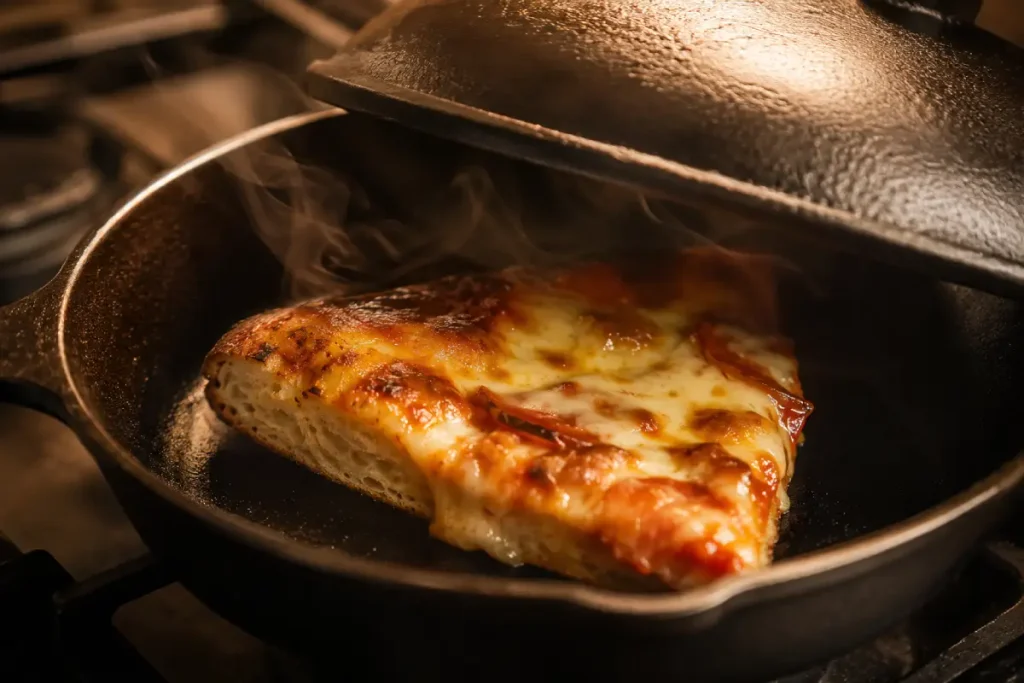
Two minutes in a dry frypan, then one minute under a lid with half a teaspoon of water. That is the whole method, and it beats the oven for any amount of pizza that fits in a pan.
Leftover pizza fails in two opposite ways. Heat it gently, and the base stays damp. Heat it hard enough to crisp the base, and the cheese turns oily and rubbery.
Most advice fixes one problem and creates the other. The methods below split the job in two: dry heat for the base, steam for the cheese.
TL;DR
| You have | Use this |
| 1–3 slices | Frypan, two-stage method |
| 4 or more slices | Oven, 200°C fan-forced, hot tray |
| Thick pan or stuffed crust | Air fryer, 160–180°C |
| Thin, flat slices | Sandwich press |
| No other option | Microwave, then finish in a pan |
Why Cold Pizza Goes Soggy and Rubbery
Three things happen to a slice overnight. Knowing them tells you what a good reheat has to undo.
Water moves from the sauce into the crust. Tomato sauce holds a lot of moisture, and that moisture soaks into the base beneath it. This is why a cold slice feels damp underneath but dry at the edge.
The starch goes stale. Baking softens the starch in the dough. Chilling hardens it again, the same way day-old bread turns firm. Only proper heat reverses it, so a lukewarm slice still tastes stale.
The cheese wrings itself out. Melted cheese is a protein net holding fat and water. Heat it too hard a second time and the net tightens, pushing the fat out. That gives you orange oil on top and a bouncy texture below.
The lesson: the base needs strong heat, the cheese needs gentle heat. Do them in that order.
The Frypan Method (Best for 1–3 Slices)
No preheating, under four minutes, and the most reliable result of any method here.
- Heat a dry pan on medium. Cast iron is best. Add no oil, since the base already carries plenty of fat and cooking with oil at high heat can push it past its smoke point before the crust even crisps.
- Lay the slices in flat, base down, not touching. Leave them uncovered for 2–3 minutes. The metal drives moisture out of the base and crisps it.
- Add half a teaspoon of water to the edge of the pan, away from the pizza. Cover with a lid straight away.
- Turn the heat to low for 60 seconds. The steam melts the cheese from above without overheating it.
- Lift the lid, check the base has browned, and serve.
The order matters more than the timing. Crisp first, steam second. Do it the other way around and you trap water under the base.
Not sure it is ready? Lift a corner with a spatula at two minutes. Pale and floppy means give it one more minute before you add water.
The Oven Method (4 or More Slices)
The oven wins on volume. Past three slices, a pan means several rounds, and the first batch goes cold.
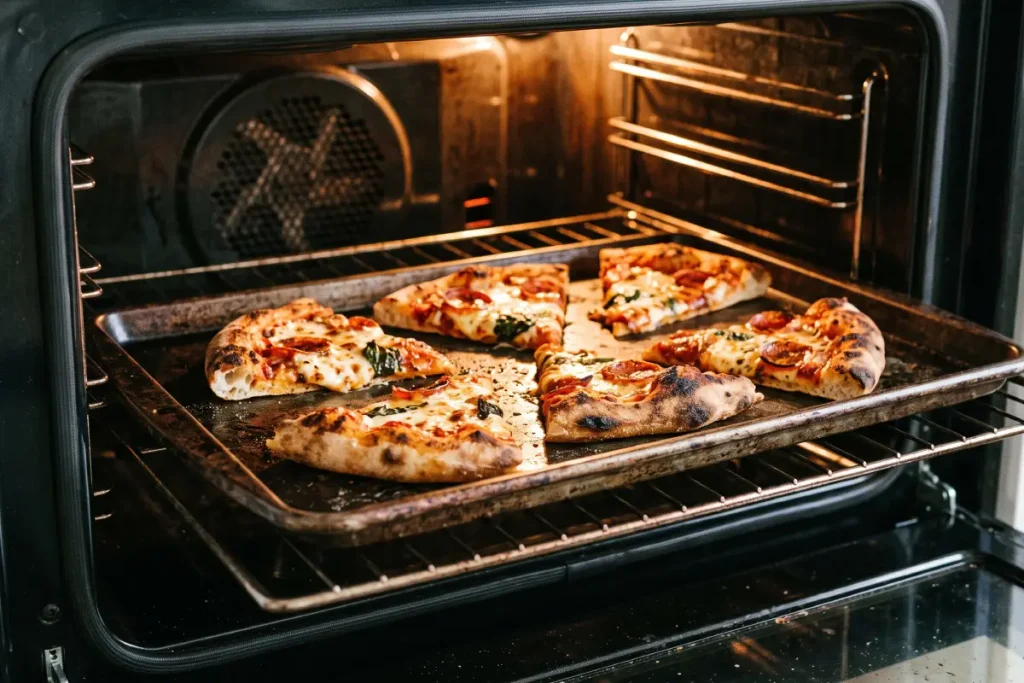
Preheat to 200°C fan-forced (220°C conventional) with the tray, stone or steel already inside. Most Australian ovens run fan-forced by default, so drop about 20°C from any US recipe.
Put the slices straight onto the hot surface. A cold tray costs you the crisp base because the slice spends its first few minutes warming the metal.
Thin and wood-fired bases need 5–7 minutes. Thicker bases need 8–10. Skip the foil cover that some recipes suggest, as it traps steam and undoes the whole point.
The Air Fryer (Thick and Stuffed Crusts)
An air fryer is a small fan oven. It crisps fast, which makes it the best pick for thick pan slices and stuffed crusts that need time to warm through.
Set it to 160–180°C for 3–5 minutes. Any hotter and the cheese scorches before the middle is warm.
Use a single layer with space between the slices. An overlapped basket steams instead of crisps.
The catch is dryness. Moving air pulls water out of toppings, so mushrooms, capsicum and chicken can go leathery. Thin slices also burn here faster than anywhere else.
The Sandwich Press (The Aussie Shortcut)
Almost every kitchen in Perth has one, and nobody writes about it. It suits the job perfectly: the bottom plate crisps the base while the top plate melts the cheese at the same time.
Heat the press fully, then rest the lid on the slice without clamping it down. Two to three minutes does it.
Pressing flattens the crumb into a wafer and squeezes oil out of the cheese. This works best on thin, flat slices and poorly on anything with a tall pile of toppings.
The Microwave (Last Resort, but Fixable)
A microwave heats the water inside the crust, and that water turns to steam with nowhere to go. The base softens, the cheese overheats, and the slice turns tough within a minute of coming out.
If speed is all that matters, three changes help:
- Use 50% power, not full.
- Stand a mug of water beside the plate to absorb some of the energy.
- Heat in 30-second bursts and stop as soon as the centre is warm.
Better still: microwave for 30 seconds, then finish the slice base-down in a hot dry pan for 90 seconds. You get microwave speed with a crisp base.
Compare the Methods at a Glance
| Method | Time | Base | Cheese | Best for | Watch out for |
| Frypan, two-stage | 3–4 min | Crisp, even | Glossy, properly melted | 1–3 slices, thin to medium bases | Adding water too early |
| Oven, hot tray | 5–10 min | Crisp, slightly drier | Well melted | 4+ slices, feeding a group | Cold tray ruins the base |
| Air fryer | 3–5 min | Very crisp | Melts and browns fast | Thick pan, stuffed crust | Toppings dry out |
| Sandwich press | 2–3 min | Crisp both sides | Melted by contact | Thin, flat slices | Clamping flattens it |
| Microwave | 1–2 min | Soft, then tough | Rubbery, oily | Nothing, unless stuck | Finish in a pan |
Match the Method to Your Crust
Thin and wood-fired. These crisp the fastest and burn fastest. Use a frypan or sandwich press and check early. A proper wood-fired base from a pizzeria like Pizza Riviera can go from crisp to cracker in under a minute of extra heat.
Standard delivery base. The frypan method works exactly as written.
Thick pan and deep dish. Use the air fryer at 160°C or the oven at 190°C for 8–12 minutes. Accept that the top browns before the centre is ready.
Stuffed crust. Cover the crust edge with foil for the first half, then remove it.
Raw toppings. Rocket, fresh basil, pesto and prosciutto do not survive a reheat. Scrape them off, heat the slice, put them back on.
Store It Right or the Reheat Won’t Work
Half the sogginess happens in the fridge, hours before you turn on an appliance.
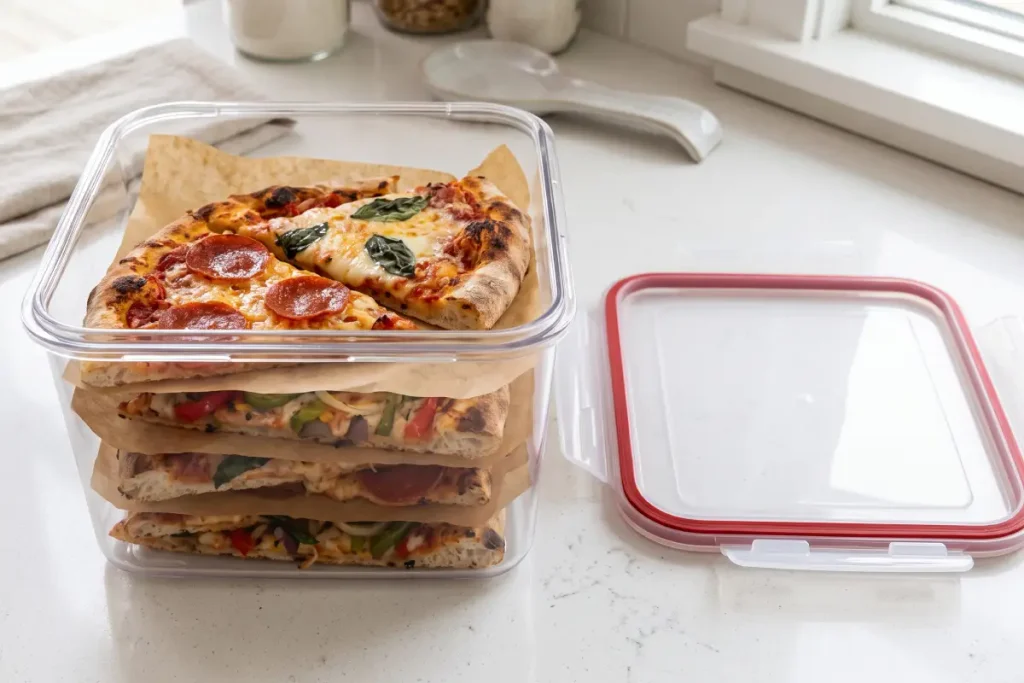
Get the slices out of the box. Cardboard holds humidity against the base and offers no protection from fridge smells.
Stack them in an airtight container with baking paper between each layer. The paper stops one slice from bonding to the next.
Skip tight cling film on its own. It traps the moisture, leaving the sauce and holding it against the crust.
Leftover pizza keeps for three to four days in the fridge. To freeze, layer it flat with baking paper, then reheat from frozen at 190°C for about 12 minutes.
Food Safety Rules That Matter in a Perth Summer
A kitchen bench on a hot February afternoon sits right inside the bacterial danger zone, which runs from 5°C to 60°C. Pizza counts as a high-risk food because of the cheese and meat.
Australian guidance uses the 2-hour / 4-hour rule, and the time is cumulative across every period the food has been out of the fridge:
- Under 2 hours out: eat it or put it back in the fridge.
- 2 to 4 hours out: eat it now, but do not refrigerate it again.
- 4 hours or more: throw it out.
Full details sit with Food Standards Australia New Zealand.
That settles the classic question about a box left out overnight. Bin it. No reheating method makes bacterial toxins safe.
Reheat to at least 75°C all the way through, and reheat only once. A slice that has already been reheated and chilled again belongs in the bin.
Cold pizza straight from a cold fridge is fine to eat. The risk is time in the danger zone, not the temperature on your plate.
So, Which Method Should You Use Tonight?
There is no single best way to reheat pizza, and the right choice comes down to how much you have. What never changes is the principle: crisp the base with dry heat first, then melt the cheese with brief steam second.
For one to three slices, the frypan wins on every measure. Two to three minutes dry, then half a teaspoon of water under a lid for one minute more.
For four or more slices, use the oven at 200°C fan-forced with a preheated tray. For thick pan bases and stuffed crusts, the air fryer at 160–180°C handles the middle best. A sandwich press does a genuinely good job on thin slices.
The microwave loses on texture because it heats the water inside the crust. Thirty seconds on half power followed by 90 seconds in a hot, dry pan gets most of that back.
Storage does half the work before you start. Out of the box, layered with baking paper, airtight, eaten within three to four days.
Keep the safety limits in front of the technique. Four hours out of the fridge is the cut-off, 75°C is the target, and once is the number of times you get to reheat.
Still Got Questions About Last Night’s Pizza?
No. Take out only what you plan to eat and leave the rest cold.
No. Go straight into a 190°C oven for about 12 minutes. Thawing on the bench starts the safety clock for no reason.
It helps a little. It slows the cheese down, but it does nothing about the steam building inside the crust.
Yes, and it beats a full oven on time and running cost for one or two slices. Preheat the tray the same way.


