
Scroll through any design feed right now, and something has shifted. The sterile white rooms that defined a decade of interiors are gone. In their place: dark woods, living walls, imperfect ceramics, and spaces that feel like someone actually lives in them.
The stakes are real. Interior decisions you make now will shape how your home looks and functions for the next five to ten years. Getting it wrong does not just affect aesthetics it affects resale value, daily wellbeing, and how much you spend trying to fix it later.
This guide covers the eight dominant interior design trends of 2026, grounded in survey data and designer insight. Each section tells you what the trend is, why it emerged, and exactly how to apply it so you can design with confidence, not guesswork.
What the Data Says First
According to 1stDibs‘ ninth annual Interior Designer Trends Survey, which polled 468 design professionals worldwide, maximalism (39%) and eclecticism (38%) ranked as the most requested styles heading into 2026. Vintage and antique sourcing hit its highest rate in five years, with 85% of designers incorporating vintage pieces into their projects.
The global interior design services market sits at USD 153.85 billion in 2026, with renovation and remodelling accounting for nearly 48% of all activity, a segment growing at nearly 12% annually through 2031.
These numbers reflect a cultural shift, not just an aesthetic one. People are investing more in the spaces they already own, demanding materials with traceable origins, and rejecting trends that age badly. The eight trends below are where that investment is going.
Trend 1: Thoughtful Maximalism
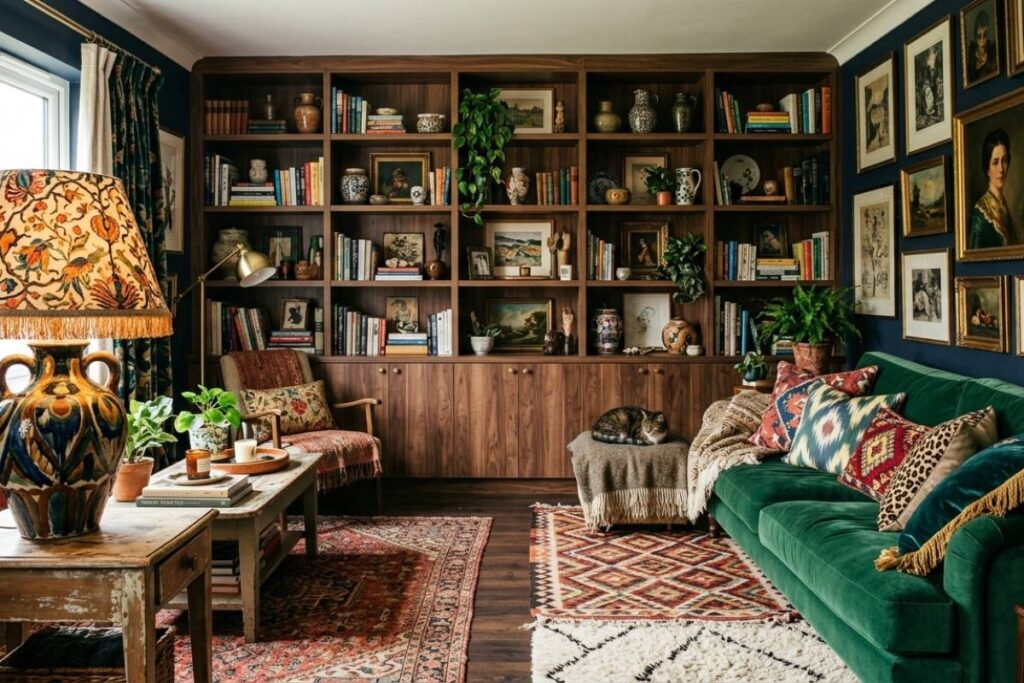
Maximalism is back, but this version is not the chaotic excess of the early 2000s. Designers call it “thoughtful maximalism” or “curated layering”: rich textures, bold pattern combinations, and statement pieces that coexist with intention rather than accident.
Maximalism has climbed steadily, rising from 34% of designer respondents citing it in 2023 to 39% in 2025, making it the single most requested aesthetic heading into 2026. The key distinction from older maximalism is editorial restraint; every item earns its place.
How to apply it: Anchor the room with one dominant material (walnut, velvet, stone). Build layers in pairs: a textured rug under a sculptural sofa, bold wallpaper behind minimalist shelving. Visual weight needs to be balanced, not eliminated.
Trend 2: Biophilic Design Gets Architectural
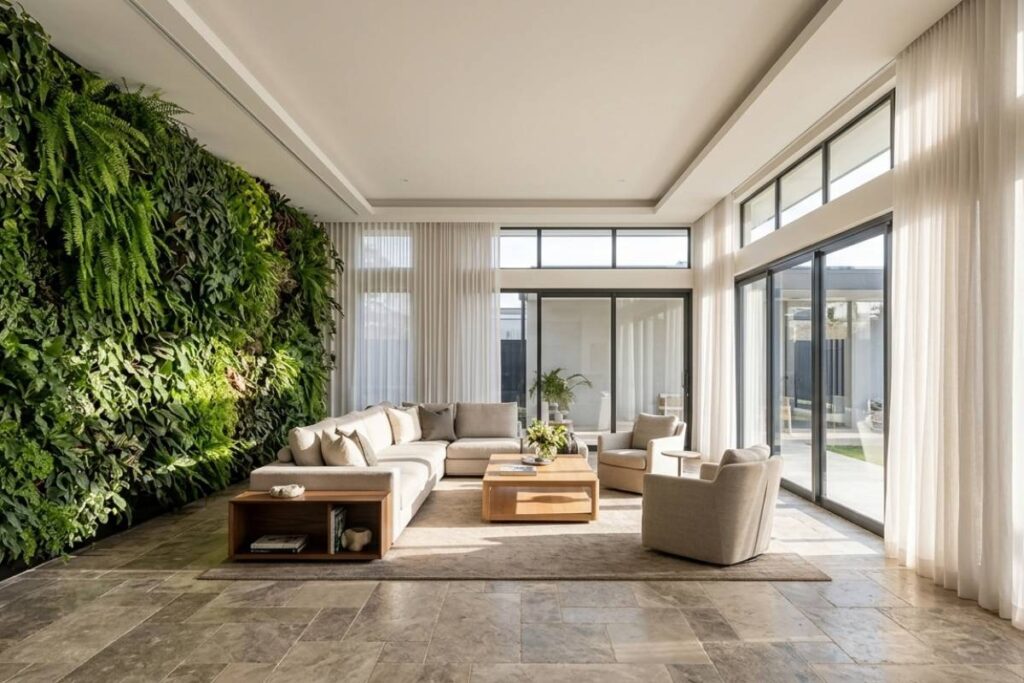
Biophilic design has moved past the “add a potted plant” phase. In 2026, it has evolved into Architectural Nature Integration, embedding natural systems structurally into homes through living walls, smart hydroponic gardens, natural acoustic materials, and layouts specifically designed to maximise natural light and outdoor sightlines.
A practical benchmark emerging from current design practice is the 50/20 Biophilic Rule: aim for 50% natural surfaces and a 20 to 30% window-to-wall ratio, softened with light-filtering sheers. Even compact apartments can apply this partially.
Natural acoustics are now a specific biophilic target; soft linen panels, cork flooring, and woven rattan absorb harsh echoes and reduce sensory fatigue. The goal is a space that performs for your nervous system, not just your eyes.
How to apply it: Replace one synthetic surface per room with reclaimed wood, stone, or bamboo. Position seating toward outdoor sightlines. Swap blackout blinds for light-diffusing sheers to maintain privacy without blocking daylight.
Homeowners weighing timber-look surfaces against authentic reclaimed wood should understand that laminate flooring carries a different sustainability profile and resale impact than the natural materials driving the biophilic movement in 2026.
Trend 3: Colour Drenching and Moody Palettes
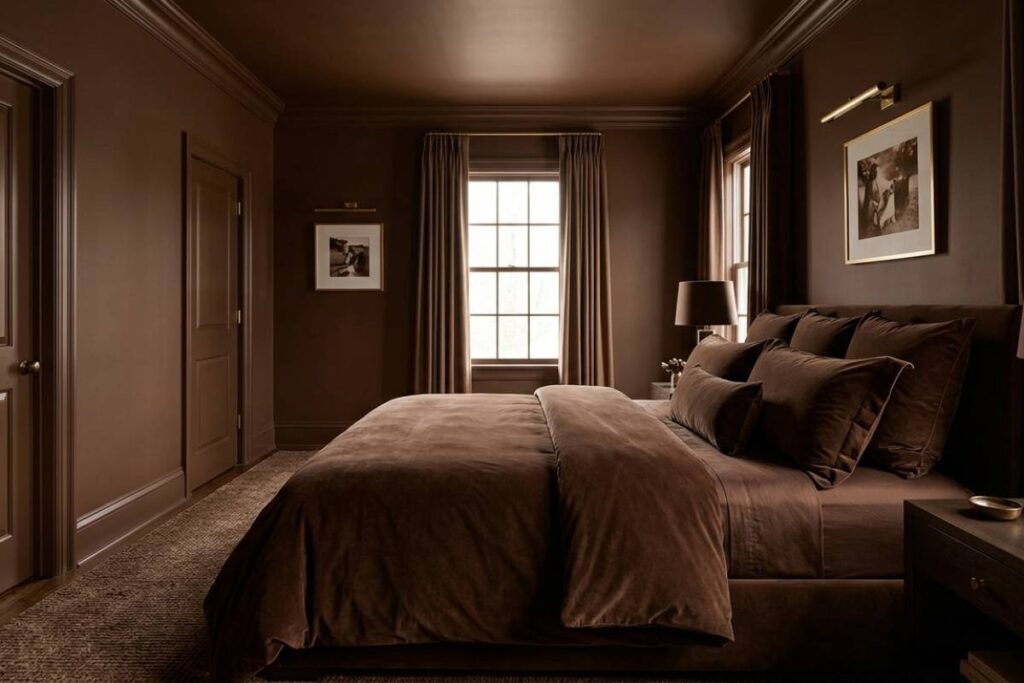
Colour drenching, applying a single hue across walls, ceiling, trim, and furnishings, is one of the defining techniques of 2026. It creates visual coherence and makes rooms feel considered rather than painted.
Chocolate brown continues to lead as the top designer colour for 2026, cited by 33% of respondents, nearly double its 17% share from 2022. Burgundy surged from 7% to 21%, while butter yellow more than doubled to 30%. The palette is earthy, rich, and emotionally weighted.
All-white interiors and the farmhouse aesthetic have both lost significant designer support, replaced by darker woods like walnut, mahogany, and smoked oak taking centre stage. Cold, sterile palettes are out. Warmth and depth are in.
How to apply it: Choose one deep, earthy tone and apply it consistently across a single room before expanding. Chocolate brown, deep forest green, and burgundy work well as full-room drench colours. Limit metallic accents to brass or aged bronze to reinforce warmth.
Trend 4: Sustainable and Circular Materials
Sustainability has moved from a premium feature to a baseline expectation. Clients now prioritise whole-life carbon assessments and circular economy practices, with designers offering wellness-aligned upgrades and templated sustainable playbooks that shorten lead times.
Materials trending in 2026 include mycelium leather, seaweed-based textiles, reclaimed and salvaged wood, recycled cork, bamboo, and recycled composites — all chosen for traceable provenance rather than generic “eco” branding. The sourcing story matters as much as the material itself.
Designers report that clients are actively requesting objects with documented origin, hand-embroidered textiles from named artisans, glasswork from named regions, treating provenance as both an ethical and aesthetic differentiator.
How to apply it: When shopping for furniture, ask the retailer for the material origin and production certification. FSC-certified timber, OEKO-TEX certified textiles, and pieces from named local makers outperform generic “sustainable” labels on longevity and resale value.
Trend 5: Warm Minimalism Replaces Cold Minimalism
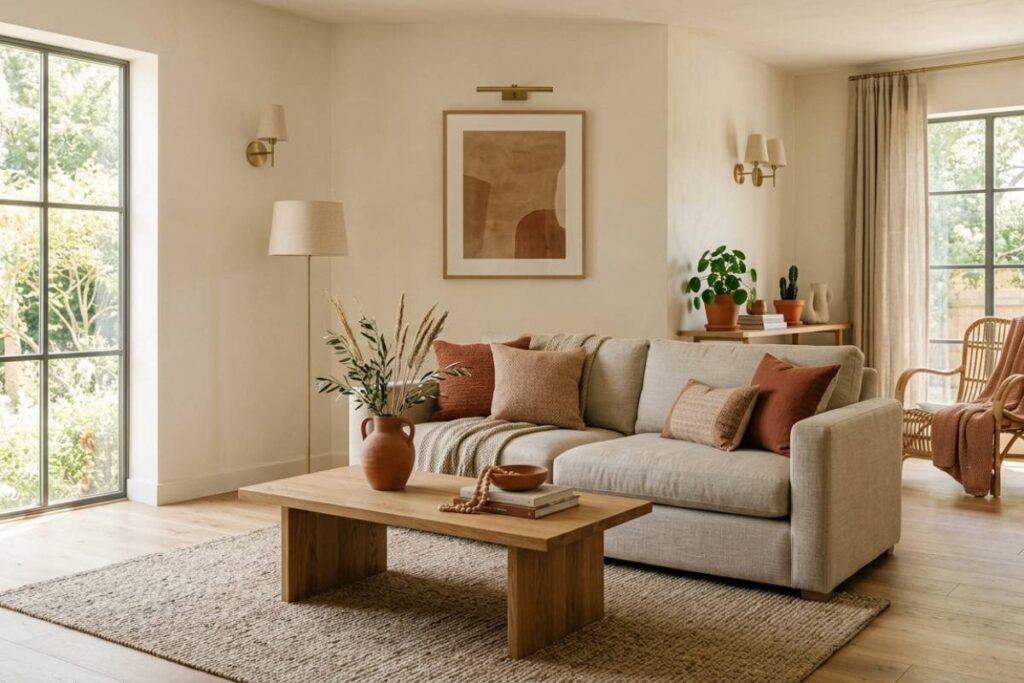
Cold minimalism, white walls, chrome fixtures, and bare surfaces are being retired. What replaces it is Warm Minimalism: clean layouts and restrained furniture count, but layered with tactile materials, rich colour, and personal objects. The edit stays tight; the sensory experience does not.
The psychological driver is clear. Blank, sterile rooms produce cognitive clarity but zero emotional warmth. Post-pandemic, people want spaces that feel habitable, personal, and restful, not showrooms.
How to apply it: Keep the furniture count low (five or fewer pieces in a living room). Replace chrome and glass with matte brass, aged terracotta, and linen. One textured throw and one warm-toned lamp shift a cold minimal space to a warm minimal without clutter.
Trend 6: Invisible Smart Home Technology
The smartest homes in 2026 are the ones where you cannot see a single piece of technology. Speakers disappear into walls. Switches are replaced by gesture panels. Lighting systems adapt to the time of day without visible hardware.
Invisible smart home technology describes smart lighting, adaptive materials, and responsive environmental systems that merge with natural and tactile surfaces. The technology is felt through the room’s behaviour, not seen on its walls.
Smart lighting is the most accessible entry point. Scenes programmed for work, dining, and rest allow a single open-plan room to shift registers through light temperature alone, no architecture required.
How to apply it: Start with smart lighting scenes before investing in broader home automation. Replace visible plugs and switches with flush-panel alternatives. Route cables through walls before finishing retrofitting; after painting is the most common and expensive mistake.
The same principles reshaping residential spaces, warm palettes, biophilic elements, and invisible technology are now crossing into corporate interior design, driven by employers designing offices that justify the commute under hybrid work arrangements.
Trend 7: Curved Forms and Sculptural Furniture
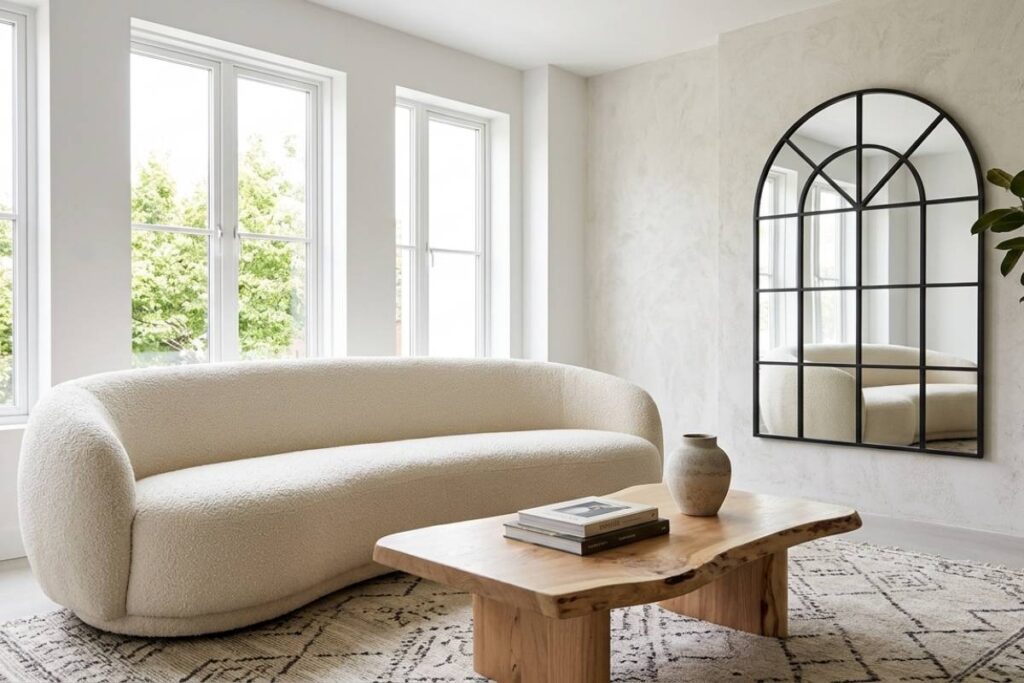
Sharp, angular furniture dominated the 2010s. In 2026, curved silhouettes of boucle sofas with rounded arms, arched doorways, kidney-shaped coffee tables, and organic-form pendant lights anchor the shift away from rigid geometry toward interiors that feel softer and more human.
The functional case is strong: curved forms reduce visual tension in a space and make furniture feel more approachable. In compact rooms, a curved sofa eliminates the hard corner that makes a room feel smaller.
How to apply it: Introduce curves through accessories before committing to upholstery. A curved mirror, an arc floor lamp, or a round dining table tests the aesthetic at low cost. If it works for the room, scale up to a curved sofa or an arched built-in.
Trend 8: Vintage and Antique Integration
On average, 36% of all items sourced for design projects in 2025 were vintage or antique — the highest proportion since 2021. Antique usage surged from 56% of designers sourcing pre-1920s pieces in 2024 to 63% heading into 2026.
The shift is not nostalgia for nostalgia’s sake. Designers cite a “raised level of consciousness around sustainability,” with vintage and antique pieces reimagined through updated fabrics and finishes that honour the integrity of the original object while making it functional for a modern context.
Unlike the recreation of full period rooms, the current approach blends one or two vintage anchors into a contemporary base. This is where the eye of a Creative Property Stylist becomes practical, knowing which vintage piece anchors a room versus which one fights it is a judgment call that saves both time and money. A 1950s credenza in a 2026-minimal living room creates the kind of character that mass-produced furniture cannot replicate.
How to apply it: Target pieces from the 1920s to 1950s for the strongest resale and aesthetic value. Focus on structural quality over condition-worn leather and aged patina, read as intentional character in 2026 interiors. Re-upholstering in a current-trend fabric (boucle, bouclé, bouclé linen, deep velvet) modernises without replacing.
What’s Out in 2026
Understanding what is receding is as important as knowing what is rising. Adopting a trend that is already fading accelerates the need for costly updates.
All-white interiors now read as dated and emotionally flat. The all-white kitchen, in particular, has passed its peak. Farmhouse and shiplap aesthetics are in rapid decline, largely because mass replication stripped them of character. Cold industrial design, with exposed concrete, black steel, and bare Edison bulbs, peaked around 2019 and has been retreating since.
Freestanding bathtubs as centrepieces are losing ground to large wet-room showers with natural stone. Open shelving in kitchens is declining as homeowners accept that maintenance reality does not match the styled photography that popularised it.
2026 Interior Design: In vs Out at a Glance
| Element | In 2026 | Out 2026 |
| Colour palette | Chocolate brown, burgundy, deep forest green, butter yellow | All-white walls, cool grey schemes |
| Aesthetic | Thoughtful maximalism, warm minimalism | Cold minimalism, farmhouse shiplap |
| Materials | Mycelium leather, reclaimed wood, natural stone, cork | Fast-furniture composites, generic “eco” labels |
| Furniture form | Curved, sculptural, organic silhouettes | Sharp angular frames, chrome-and-glass combinations |
| Sourcing | Vintage, antique, provenance-traceable artisan pieces | Mass-produced replica furniture |
| Nature integration | Living walls, hydroponic gardens, natural acoustics | Potted plants as afterthought |
| Technology | Invisible smart lighting, flush panels, hidden speakers | Visible smart hubs, exposed cable management |
| Kitchen feature | Wet room showers, statement stone | Open shelving, freestanding bathtubs as focal points |
Conclusion
The interior design trends defining 2026 share a single underlying logic: spaces should support emotional well-being, carry genuine character, and be built to last longer than the trend cycle that inspired them. Thoughtful maximalism, biophilic architecture, moody palettes, circular materials, and invisible technology are not isolated aesthetics; they are responses to the same demand for depth over surface. Apply even two or three of these trends with intention, and the result is a space that will not need revisiting for years.


