Does looking at the overgrown canopy in your backyard fill you with a vague sense of dread? You know something needs to be done. The branches are inching dangerously close to your roof, and the shrubbery looks more like a jungle than a landscape.
But here is where the anxiety sets in: You grab a saw, but you hesitate. What if you cut the wrong limb? What if you accidentally kill the tree you’re trying to save? Or worse, what if that heavy branch doesn’t fall where you think it will? The terminology alone—pruning, trimming, lopping—is enough to make most homeowners put the tools back in the shed and ignore the problem until it’s too late.
Stop guessing. Proper tree care isn’t just about hacking away green leaves; it is a science that balances aesthetics with biological health. In this guide, we are going to demystify the process. We will break down exactly how to cut, when to cut, and why understanding the difference between pruning and trimming is the secret to a thriving property.
The Golden Rule: Pruning vs. Trimming Defined
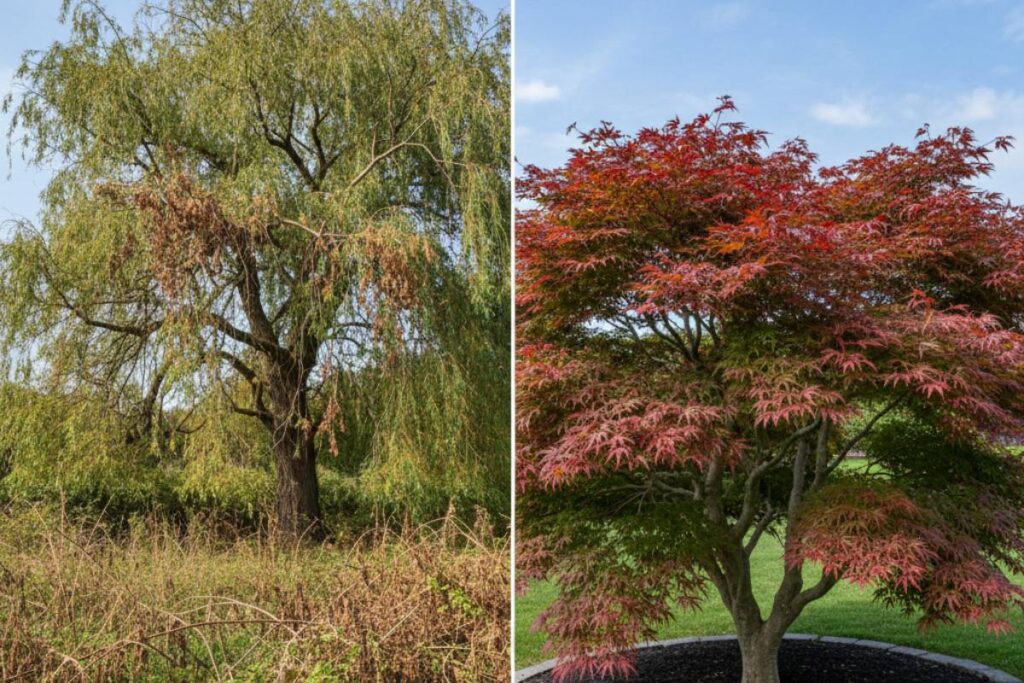
While often used interchangeably, Pruning and Trimming serve different purposes. Pruning is a health-focused process used to remove dead, loose, or infected branches to protect the tree’s structural integrity. Trimming is an aesthetic process focused on cutting back overgrowth to maintain a specific shape, size, or design for the landscape.
Think of it this way: Pruning is healthcare; Trimming is a haircut.
- Pruning: Focuses on the tree’s needs. It involves removing deadwood, crossing branches that rub against each other, and “water sprouts” that suck energy from the main trunk.
- Trimming: Focuses on the human’s needs. It involves clipping hedges to keep a box shape or removing low-hanging branches that block a view or a walkway.
Why We Cut: The Biological Benefits
Many homeowners believe that cutting a tree hurts it. In reality, strategic removal of tissue stimulates growth. When you prune correctly, you are directing the tree’s energy reserves into the areas that matter most.
1. Disease Control (Sanitation) Dead or decaying branches are entry points for insects and fungal infections. By removing these “vectors,” you stop the spread of disease to the main trunk.
2. Property Protection: Gutters and Fascia One of the most common reasons for tree trimming is protecting your home’s exterior. Overhanging branches drop constant debris—leaves, sap, and twigs—which can clog your drainage system. If left unmanaged, the weight and moisture can lead to sagging gutters and fascia damage, eventually causing wood rot or foundation issues. Keeping a clear “skyline” above your roof is essential for home maintenance.
3. Enhancing Fire Safety and Defensible Space In many regions, landscape management is a primary pillar of fire safety. Overgrown trees with “ladder fuels” (low-hanging dead branches) allow ground fires to climb into the canopy. By pruning these lower limbs and removing deadwood, you create a defensible space that can protect your home during a wildfire.
4. Improved Air Circulation & Sun Penetration A dense canopy might look lush, but it can suffocate the interior of the tree. Thinning the crown allows wind to pass through (preventing storm damage) and sunlight to reach the inner leaves, promoting photosynthesis throughout the entire structure.
The 3-Cut Method: How to Prune Like a Pro
If you take only one thing away from this article, let it be this: Never flush cut.
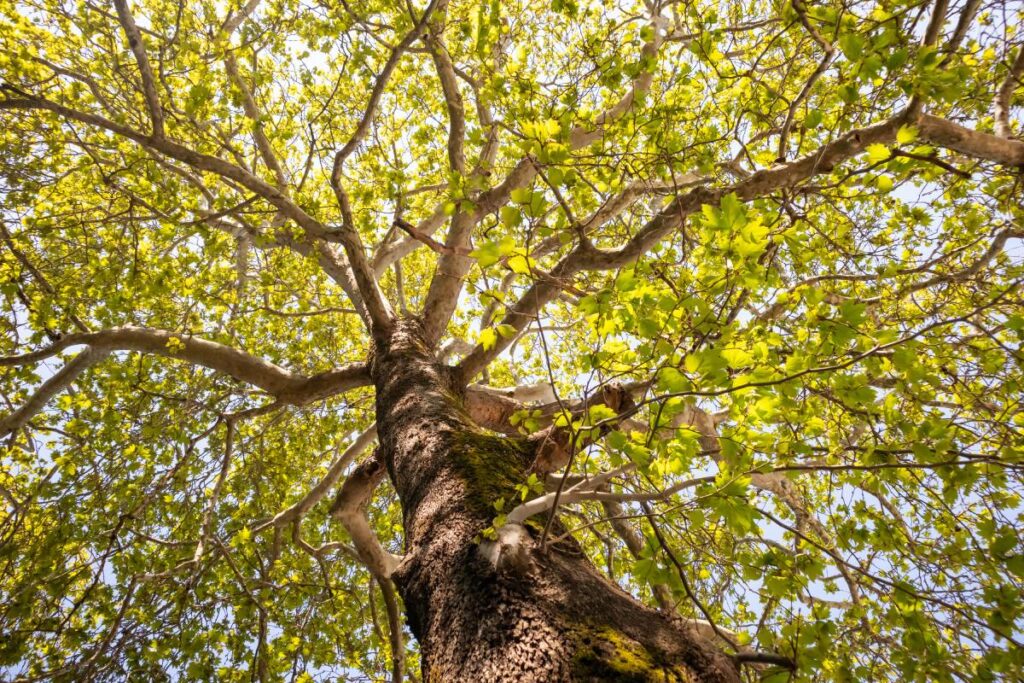
A “flush cut” involves sawing a branch right up against the trunk, slicing off the Branch Collar. The collar is the swollen area where the branch meets the trunk. It contains specialised cells that seal wounds. If you cut the collar off, the tree cannot heal, leading to rot inside the main trunk.
To avoid tearing the bark and damaging the collar, use the 3-Cut Method for any branch larger than 1 inch in diameter:
Step 1: The Undercut Make a shallow cut on the underside of the branch, about 6–12 inches away from the trunk. This stops the bark from tearing down the trunk when the branch falls.
Step 2: The Relief Cut Move a few inches further out (away from the trunk) and cut all the way through the branch from the top. The weight of the branch will cause it to fall clean, stopping at your undercut.
Step 3: The Final Collar Cut Now that the heavy weight is gone, locate the Branch Bark Ridge and the Branch Collar. Make your final cut just outside this swollen area. Do not leave a long stub, but do not cut flush to the trunk.
Timing is Everything: When to Cut
Cutting at the wrong time can stress a tree or invite pests. The timing depends heavily on the species.
1. The Dormant Season (Late Winter) For most deciduous trees (trees that lose leaves), late winter is the gold standard.
- Why: The tree is asleep. Sap flow is minimal, reducing stress.
- Benefit: Without leaves, you can clearly see the tree’s structure and identify damaged limbs easily.
- Explosion of Growth: Pruning in winter results in a vigorous burst of spring growth.
2. Spring (Post-Bloom) If you have flowering trees (like Dogwoods or Cherries), wait until after they bloom.
- Why: If you prune them in winter, you are cutting off the buds that are waiting to open. You won’t kill the tree, but you will ruin that year’s flower show.
3. Summer (Corrective Only) Summer pruning is usually reserved for slowing down growth or removing deadwood that is easier to spot when the tree is “green.”
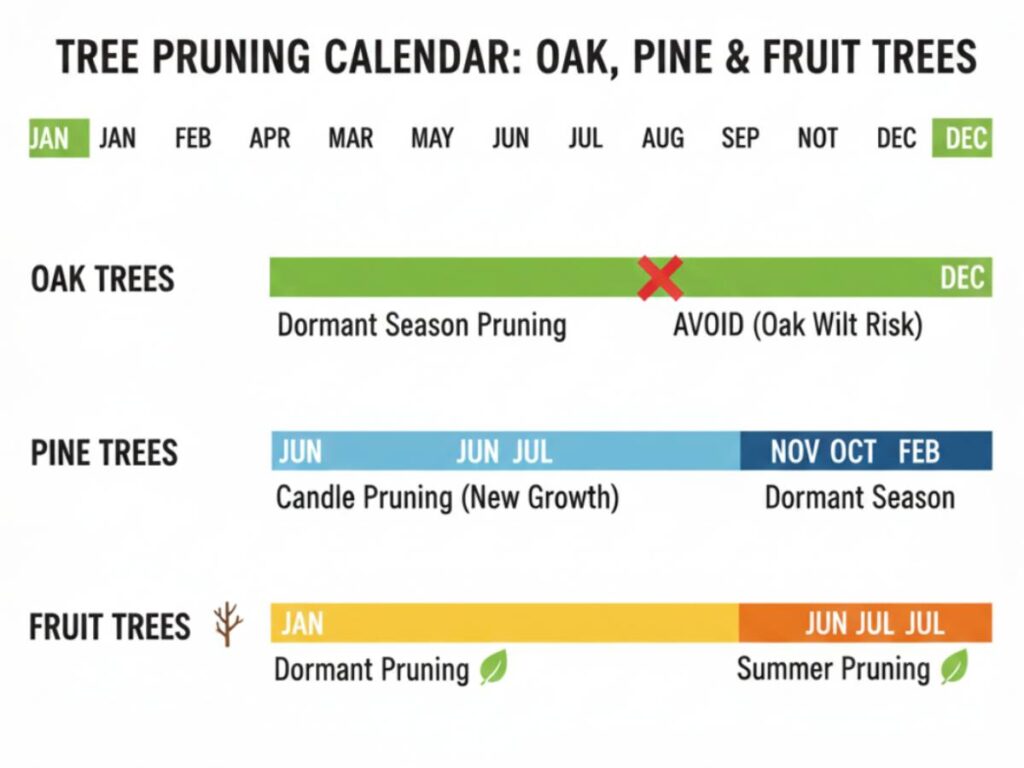
- Warning: Avoid heavy pruning of Oaks in the summer, as fresh wounds attract beetles that carry Oak Wilt disease.
4. The “Never” List
- Never Top a Tree: “Topping” is cutting the top off a tree to reduce its height. This is a crime against arboriculture. It creates weak, spindly regrowth and leaves massive wounds that the tree cannot heal.
- Avoid Fall Pruning: Pruning in the fall stimulates new growth right before the freeze. This new growth will likely die when the temperature drops.
Essential Tools for the Job
You cannot do quality work with dull or incorrect tools. Using the wrong tool crushes the plant tissue rather than slicing it.
- Hand Pruners (Bypass vs. Anvil):
- Bypass Pruners: Act like scissors with two passing blades. Use these for live green stems. They make clean cuts.
- Anvil Pruners: Have a blade that crushes against a flat surface. Use these only for dead wood. They crush live tissue.
- Loppers: Essentially hand pruners with long handles for leverage. Good for branches up to 2 inches thick.
- Pruning Saw: A curved blade with aggressive teeth. Used for branches too thick for loppers. Unlike carpentry saws, these cut on the “pull” stroke.
- Pole Saw: For reaching high branches while keeping your feet on the ground.
The Danger Zone: DIY vs. Hiring an Arborist
We love the DIY spirit, but tree work is statistically one of the most dangerous outdoor tasks. Beyond the risk of falls, you must also prioritise electrical safety.
The “Feet on the Ground” Rule If you can prune the tree while standing on solid ground (or using a pole saw), it is generally safe for a homeowner. However, if you find yourself reaching for a ladder or working near overhead lines, the risk increases exponentially. Wood is a conductor, and a damp branch touching a high-voltage wire can be fatal.
When to Call the Experts: For complex tasks that require climbing, rigging, or specialised knowledge of Australian Standards (AS 4373), it is safer to rely on professional expertise. This is where Wiktora Bros Tree Pruning Work stands out. Known for their precision and safety-first approach in the Mandurah and Rockingham regions, they ensure that every cut follows the natural defence system of the tree, leaving your landscape healthy and your home hazard-free.
Conclusion
Tree pruning and trimming are about more than just curb appeal; they are an investment in the longevity of your landscape and the safety of your home. By understanding the biology of the tree—identifying the branch collar, respecting the seasons, and using the 3-cut method—you shift from being a “yard worker” to a steward of your environment.
Ready to get started? Go outside and inspect your trees today. Look for the “3 D’s”—Dead, Damaged, or Diseased wood. If you spot them, you now have the knowledge to act.
Do you have a specific tree species you are struggling to manage? Drop a comment below or share this guide with a neighbour who has been a little too “happy” with the chainsaw lately!