
The “Black Box” Problem
You have spent months, perhaps years, curating your living space. You’ve selected the perfect mid-century armchair, found a rug that ties the room together, and balanced the lighting just right.
Then comes the audio equipment.
Suddenly, your cohesive design is interrupted by a clunky, industrial plastic box. For decades, audiophiles have been forced into a frustrating compromise: choose high-fidelity sound and suffer an ugly appliance, or choose a pretty speaker and suffer tinny, flat audio.
That era is over.
Today, audio engineering has merged with interior design. We are seeing a renaissance of aesthetic Bluetooth speakers and sculptural audio equipment that treat sound as a sensory experience—both auditory and visual.
In this guide, we aren’t just looking at tech specs. We are looking at speakers that earn their place on your mantlepiece.
What Defines a “Decor-First” Speaker?
A decor-friendly speaker is an audio device prioritised for its visual integration into a home environment. Unlike traditional industrial audio gear, these speakers utilise residential materials—such as walnut wood, brass accents, Kvadrat wool, and tempered glass—to mimic high-end furniture. They are designed to function as sculptural art pieces while delivering high-fidelity wireless sound.
The Best Aesthetic Speakers by Style
If you are skimming for the perfect match for your room, start here.
| Best For (Style) | Top Pick | Key Material/Feature |
| Mid-Century Modern | Klipsch The Three II | Real Walnut Veneer & Spun Copper |
| Scandi Minimalism | Vifa Helsinki | Kvadrat Wool Textile |
| Industrial Loft | Transparent Speaker | Tempered Glass & Aluminium |
| Art Curator | Bang & Olufsen Beosound A9 | Circular Fabric “Canvas” & Wood Legs |
| Hidden Tech | IKEA Symfonisk | Picture Frame / Lamp integration |

The Mid-Century Modernists: Nostalgia Meets Tech
If your home features Eames chairs, teak sideboards, and warm lighting, a plastic smart speaker will stick out like a sore thumb. You need tactile materials.
The Klipsch Heritage Series
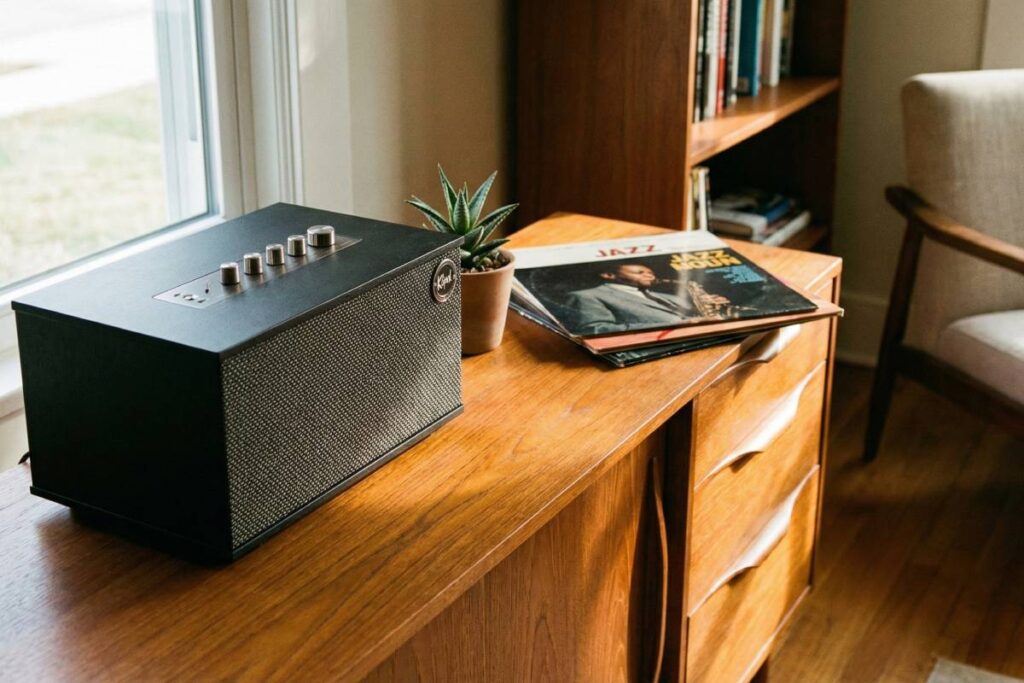
Klipsch has mastered the art of “retro-future.” Their Heritage Wireless series (specifically The One and The Three) ignores modern sleekness in favour of 1950s craftsmanship.
- Why it works: It uses real wood veneer and tactile spun copper switches and knobs. The tactile “click” of turning it on feels mechanical and grounding. This attention to detail is crucial for maintaining design continuity; just as you would apply strict heritage style logic to restoring a period-correct entryway, your audio equipment should honour the architectural era of your home rather than modernise it by force.
- The Look: It resembles a vintage radio your grandfather might have owned, but under the hood, it packs modern acoustics.
Marshall Homeline
Marshall amps are iconic in rock history. Their home speaker line takes that gritty, rock-and-roll aesthetic and polishes it for the living room.
- Design Cues: The textured vinyl covering, the salt-and-pepper fret cloth, and the brass logo.
- Placement: These look incredible on a bookshelf next to leather-bound books or vinyl records.
Key Takeaway: Choose these if you want your technology to feel “warm” and analog rather than cold and digital.
The Scandinavian Minimalists: Wool & Aluminium
For homes defined by clean lines, white walls, and “Hygge,” you need audio gear that is soft, approachable, and devoid of sharp edges. This is where textile-focused design shines.
Bang & Olufsen (B&O)
The Danish giants are the kings of this category. B&O doesn’t make speakers; they make furniture that sings.
- Beosound A1 & Level: These portable units look less like tech and more like designer clutches or architectural lighting.
- Materials: They heavily utilise anodised aluminium (for durability and sheen) paired with warm leather straps.
Vifa
Vifa is unique because it collaborates with Kvadrat, Europe’s leading manufacturer of design textiles.
- The Aesthetic: Their speakers (Helsinki, Copenhagen) are wrapped in custom-woven wool that allows sound to pass through perfectly while looking like a high-end sofa cushion.
- Colour Palette: Instead of “Tech Black,” they come in Willow Green, Misty Blue, and Slate Grey—colours found in nature.
Key Takeaway: In a minimalist home, texture is everything. A wool-covered speaker adds softness to a room dominated by glass and concrete.

The “Invisible” Audio: Speakers in Disguise
Sometimes, the best design choice is stealth. If you have limited counter space or simply hate the look of gadgets, “hidden technology” is your solution.
IKEA x Sonos (Symfonisk)
This collaboration democratised invisible audio. By putting Sonos drivers inside IKEA home furnishings, they solved the clutter problem entirely.
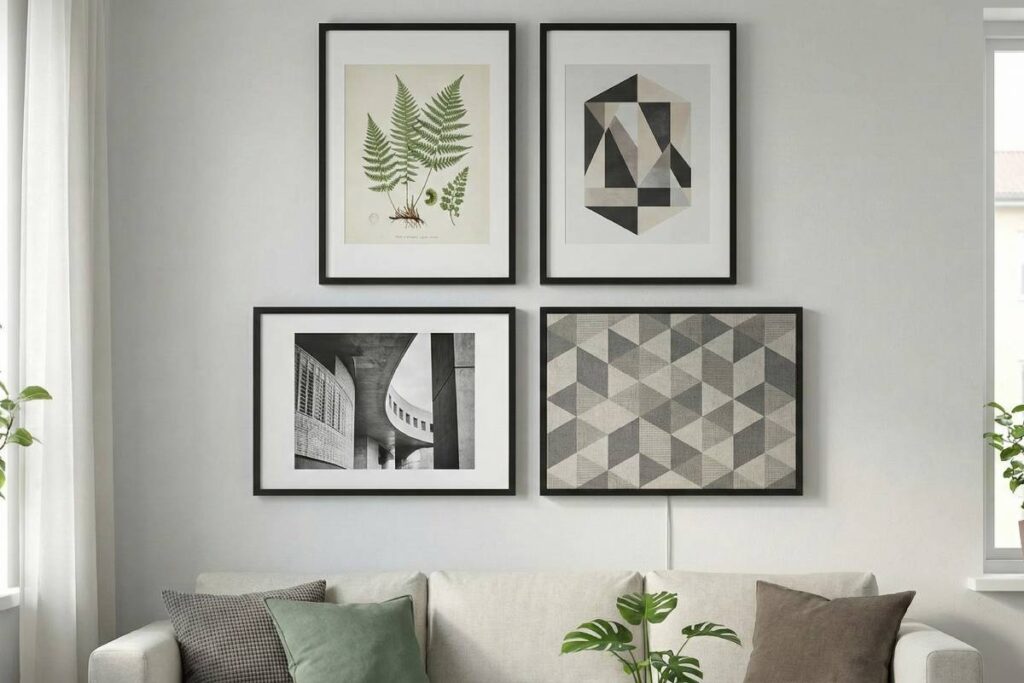
- The Picture Frame: It hangs on the wall like art. You can swap the front panel with different prints. It uses the wall to help project bass.
- The Table Lamp: It’s a functioning lamp with a speaker base. This clears your bedside table of clutter—one cord, two functions.
Samsung “The Frame” Concept
While primarily a TV, Samsung’s Music Frame creates a similar effect. It utilises a customizable bezel to blend into a gallery wall.
Key Takeaway: Perfect for small apartments or gallery walls where a 3D object would break the visual flow.
The Sculptural Statements: Audio as Art
For the “Art Curator” persona, the goal isn’t to blend in; it’s to stand out. These speakers are conversation starters—sculptural audio equipment that demands attention.
The Transparent Speaker
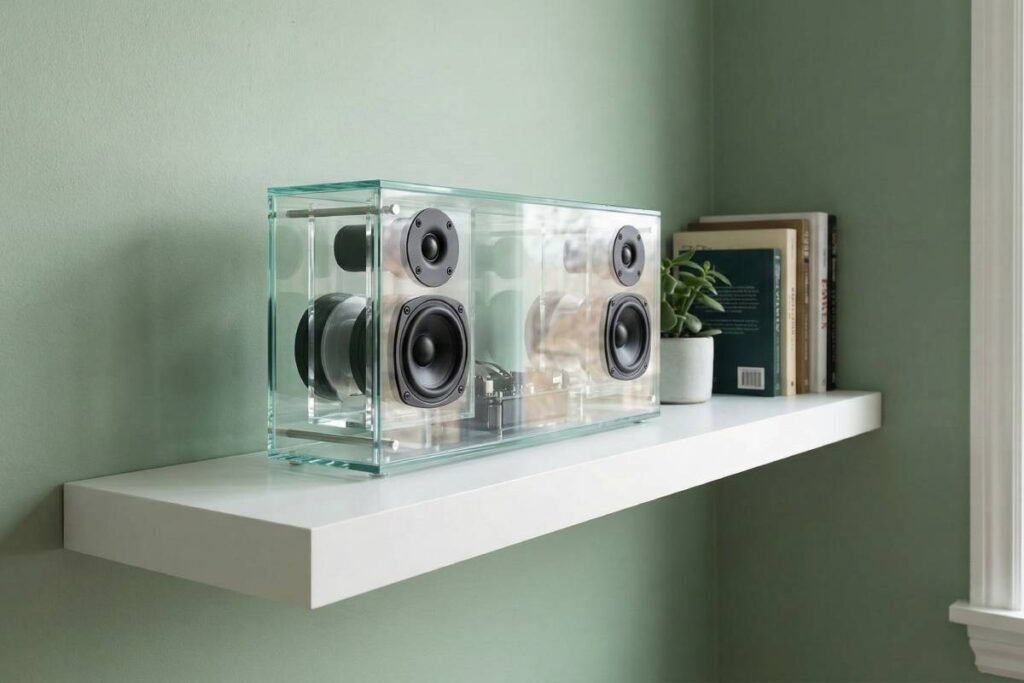
This is exactly what it sounds like. A speaker made of tempered glass and a unibody aluminium frame.
- The Philosophy: It strips away the “black box” to reveal the inner workings (the drivers and cables) as art. It is unapologetically industrial and modern.
- Visual Impact: Because it is see-through, it takes up zero “visual weight” in a room. It floats.
Devialet Phantom
If the Transparent Speaker is industrial, the Devialet Phantom is alien.
- The Shape: An organic, spherical pod that looks like it arrived from the future.
- The Performance: When the bass hits, the side “gills” (woofers) visibly pulsate. It is kinetic art.
- Placement: Ideally placed on a dedicated tripod stand in the corner of a room, like a marble bust.
Buyer’s Guide: How to Match Audio to Interiors
Before you buy, use this checklist to ensure the tech complements your decor.
1. Match the Wood Grain If your room has Walnut furniture, do not buy a speaker with a distinct Oak or Ash veneer. The clashing wood tones will look accidental. Go for a matching wood or a neutral metal/fabric.
2. Consider “Visual Weight”
- Heavy: A large black box sucks light out of a corner.
- Light Control: A white, glass, or light grey fabric speaker reflects natural light and feels smaller than it is. This is especially effective in rooms utilising airy window treatments like plantation shutters, where the goal is to maximise brightness and minimise heavy visual clutter.
- Tip: Small rooms need “visually light” speakers (like the Vifa or Transparent). Large rooms can handle the “heavy” look of a Marshall.
3. See It in Person (The “Touch Test”) Photos can be misleading. Textures like wool or spun copper need to be felt. If possible, visit a specialist retailer rather than a big-box store.
Global Tip: Seek out audio specialists who understand craftsmanship. For our readers Down Under, The Bankstown Sound Shop in Australia is an excellent example of a place where expert audio knowledge meets a dedication to quality equipment. Checking the finish in person prevents “buyer’s remorse.”
4. Cord Management is Crucial The most stylish speaker looks terrible if a messy black wire is dangling from it.
- Solution: If you can’t hide the cord, celebrate it. However, if you are tucking wires behind heavy furniture or running them under rugs to achieve that seamless look, ensure you are following essential electrical safety protocols to prevent overheating and fire hazards. Some speakers come with fabric-wrapped, patterned power cords that look intentional.
Conclusion: Sound That Doesn’t Scream “Tech”
You no longer have to apologise for your audio gear. The divide between the audiophile and the interior designer has been bridged.
Whether you prefer the nostalgic tactility of a Klipsch, the soft minimalism of a Vifa, or the sheer transparency of a glass speaker, there is an option that elevates your home’s aesthetic.
Your Next Step: Look at your living room right now. Is your current speaker adding to the room’s story, or interrupting it? If it’s the latter, it might be time for an upgrade.


